Thermoforming tools in 2–3 weeks.
Cost like Ureol, tool life like aluminium.
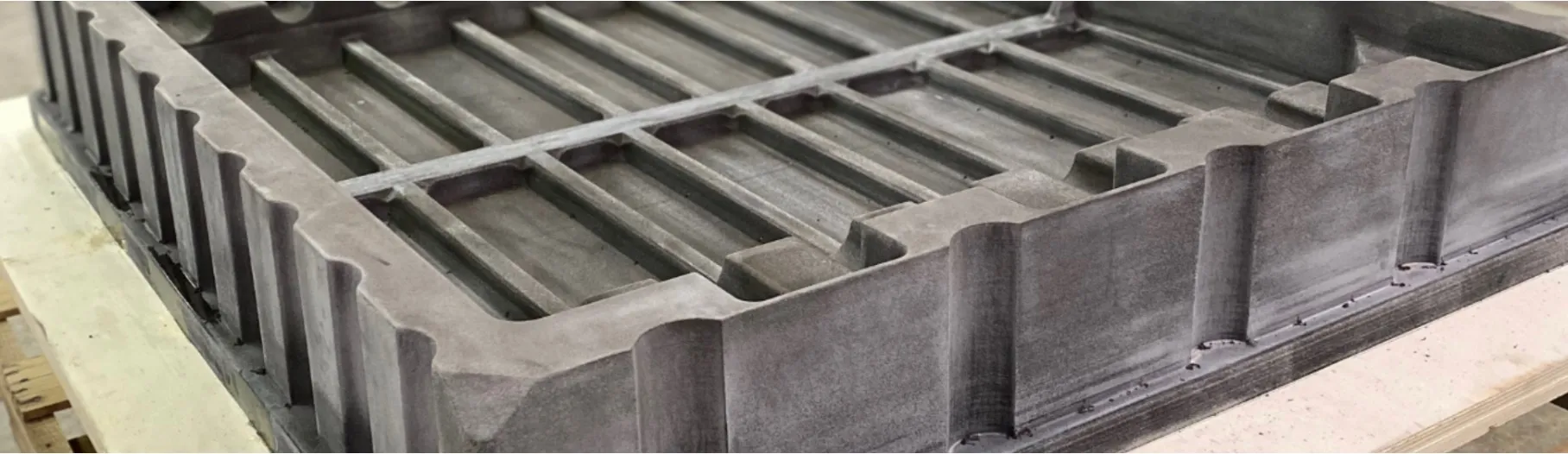
Catalysis makes tooling for thermoforming, foam and NVH, and composites using 3D sand printing. The material is porous throughout: vacuum acts instantly across the whole surface, with less webbing and fewer air inclusions, even on difficult geometries.
- 2–3weekslead time after approval
- 50%cheaper than aluminium
- 250tools delivered in Europe
- 1,000+tools in use in the USA
Tooling for three processes
One material, three applications. All tools are made in the same 3D printing process.
Thermoforming tooling
For vacuum forming and pressure forming of ABS, PS, PP, PE, PMMA, PC and PET. From prototype to small series with several thousand parts.
Learn more →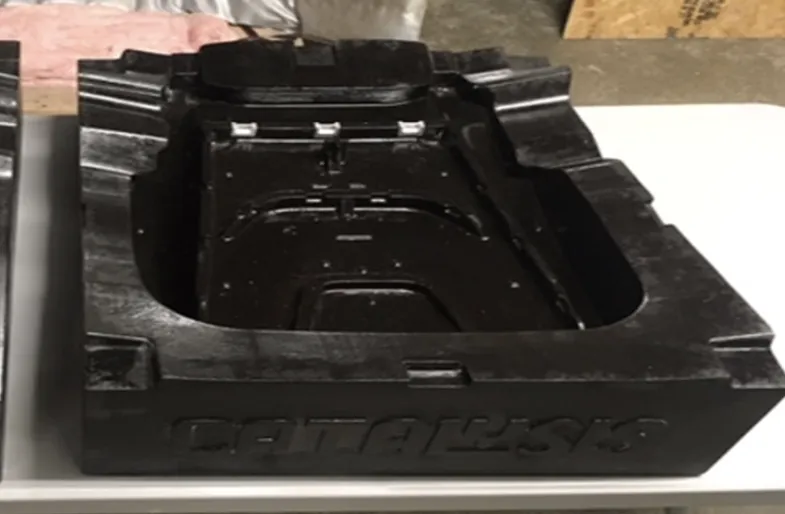
Foam and NVH tooling
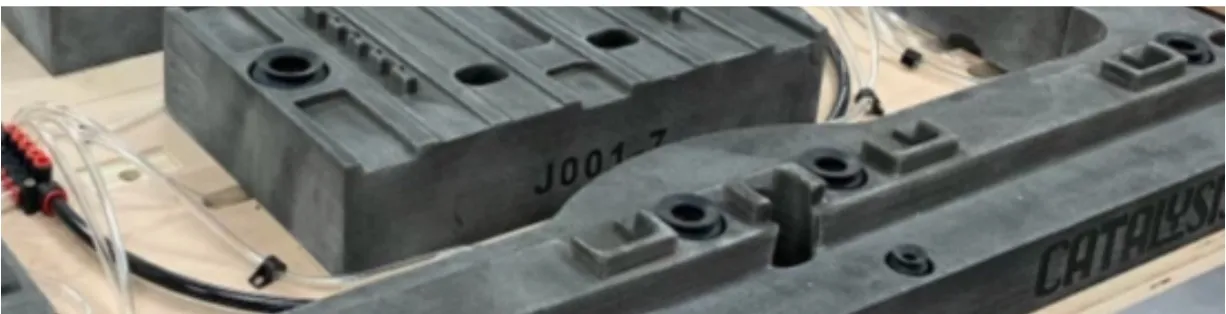
Moulds for seating components, cushions, insulation and acoustic parts. Shore 85D, stable at 10–15 psi foaming pressure, with clean venting.
Learn more →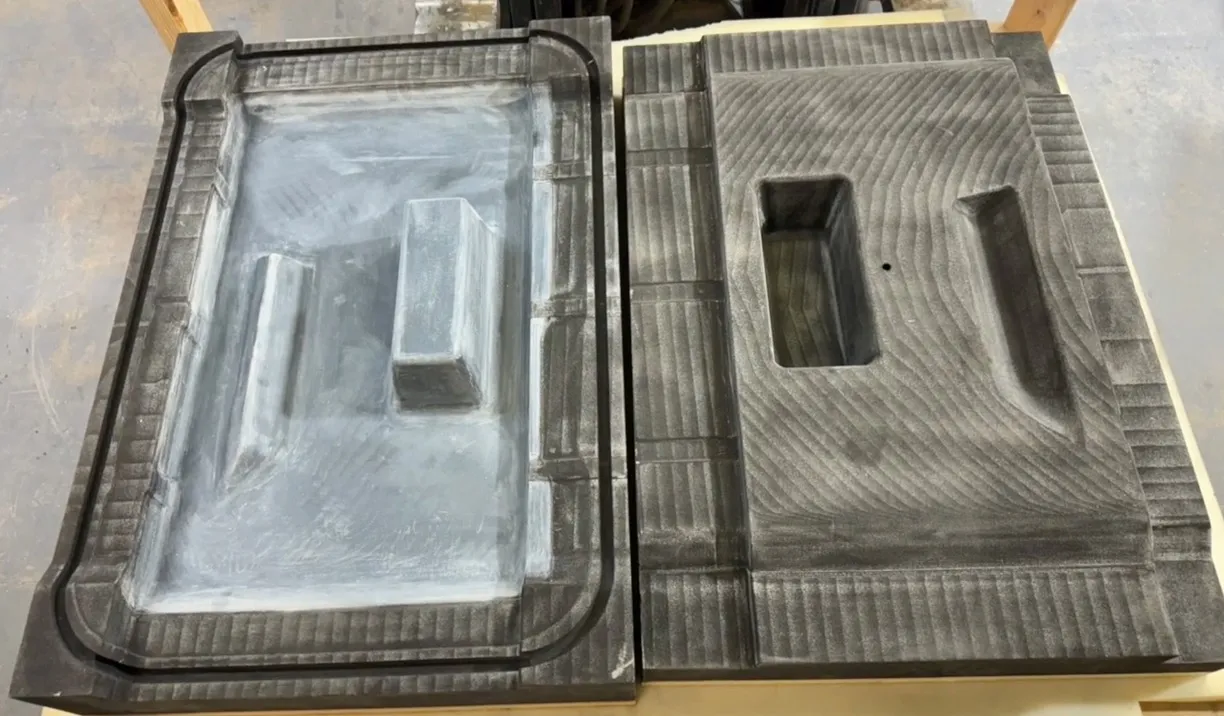
Composite tooling
Lay-up and infusion moulds for GRP and CFRP, suitable for oven and autoclave. Dimensionally stable, fully isotropic, easy to handle.
Learn more →Why sand instead of plastic?
The usual route for 3D printed tooling is plastic. Such tools last only a few parts. Catalysis prints with a natural sand material from foundry technology instead, 97 % naturally occurring. Catalysis is the only company worldwide making thermoforming tools this way.
Vacuum across the whole surface
The material is porous throughout. Vacuum passes instantly through the entire tool. We add vents only where they help, for example to ease demoulding.
Fewer forming defects
Even suction means less webbing, fewer thin spots and fewer air inclusions, even in deep contours and tight radii.
Stable and isotropic
No delamination, no material fatigue. A single mould has already produced more than 10,000 parts from 5 mm ABS.
Better for the environment
Natural sand instead of an aluminium billet or polyurethane. Less energy, less waste, no plastic printing.
Conventional tool: vacuum only at the vent holes. Catalysis: vacuum across the entire surface.
Compared
Tooling for prototypes, pre-series and small series. This is how a Catalysis tool compares with the usual alternatives.
| Aluminium (machined) | Ureol / polyurethane | Plastic 3D printing | Catalysis sand printing | |
|---|---|---|---|---|
| Lead time | 3–6 months | 2–4 weeks | 1–2 weeks | 2–3 weeks |
| Cost | high | low | low | like Ureol |
| Tool life | very high | a few hundred parts | a few parts | several thousand parts |
| Vacuum | vent holes only | vent holes only | vent holes only | whole surface |
| Stability | very high | medium | low, warps | high, isotropic |
| Ecology | energy intensive | plastic | plastic | natural sand |
How a project runs
- 1Day 0
Send data
Tool data or just the part data. We design the tool if you have no CAD.
- 2Day 2–4
Design approval
You review the 3D design and approve it. Changes are quick at this stage.
- 3Day 5–15
3D printing and finishing
Sand printing, finishing and quality inspection.
- 4Day 14–21
Delivery
Shipped on a pallet, usually 2–3 weeks after approval. Base plate and connections on request.
Tooling experience, technology from the USA
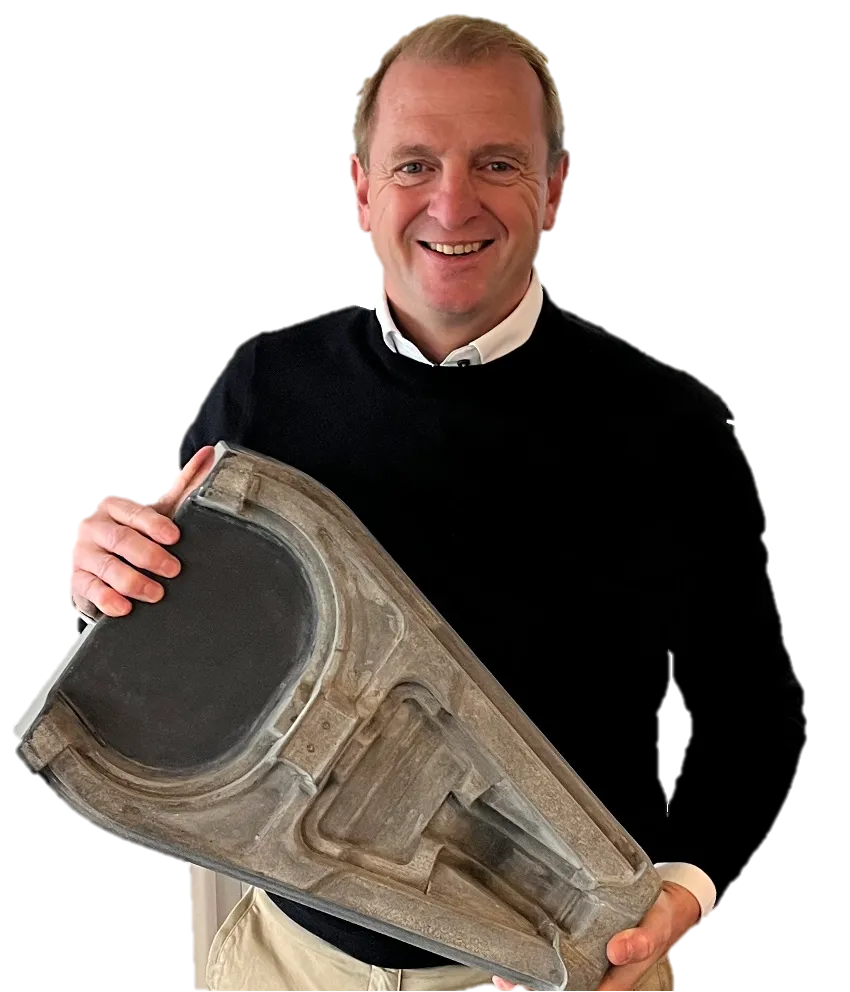
Catalysis Additive Tooling is a partner of Catalysis LLC in the USA, where more than 1,000 tools are already in use. Our team has worked with 3D printed industrial tooling for more than ten years.
In use at thermoformers across Europe
We have delivered 250 tools in Europe since launch, the 250th in September 2026. Our customers are thermoformers, plastics processors and manufacturers of seating, acoustic and composite parts in automotive, rail, aerospace, packaging and machinery.
- Lead time: 2–3 weeks after design approval instead of 3–6 months for aluminium
- Cost: Around 50 % below aluminium, at the price level of Ureol
- Tool life: Up to several thousand parts, far beyond Ureol and plastic 3D printing
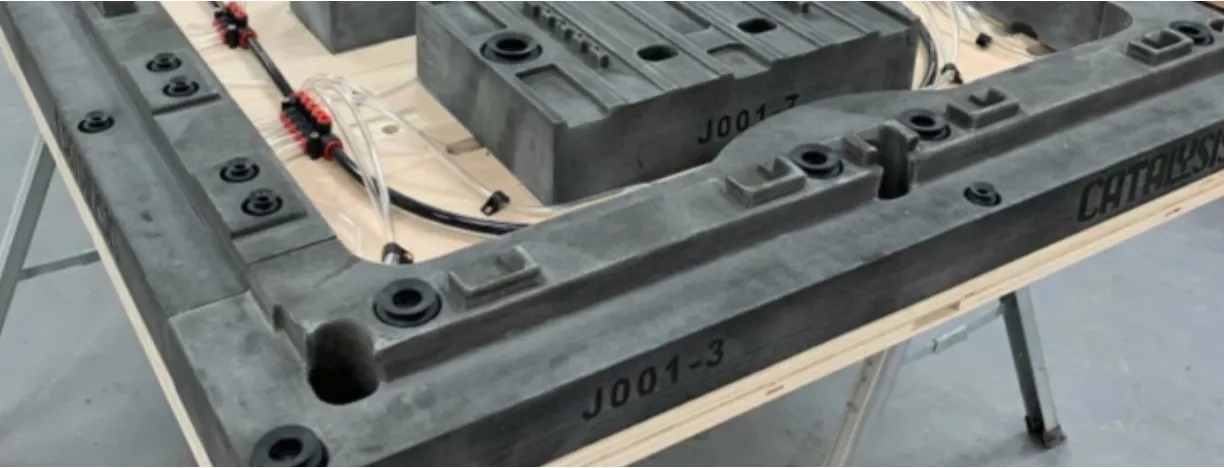
- Material: Natural sand material from foundry technology, dimensionally stable, isotropic, no plastic printing
- One-stop: Design, 3D printing, finishing, quality inspection. No CAD needed on your side
Frequently asked questions
How large can a tool be?
From small inserts to large tools for vehicle and machinery parts. For very large parts we review your data together with you and agree on the best way to build the tool.
Do I need CAD data?
No. Part data or a drawing is enough. We design the tool and you approve the 3D design. If you have tool data, even better.
Which materials can be thermoformed?
ABS, PS, PP, PE, PMMA, PC, PET and other thermoplastics, in vacuum and pressure forming. The tool withstands the usual process windows.
How many parts does the tool last?
Designed for pre-series and small series up to several thousand parts. A single mould has already produced more than 10,000 parts from 5 mm ABS.
Can I test the material first?
Yes. On request we send a free 10 × 10 cm material sample.
Let's talk about your part
Send us tool or part data. 3D design is included, no CAD needed on your side. We reply within 24 hours.
Engelbert Jilesen
Sales
+49 2302 289402-1
Engelbert.Jilesen@catalysis3d.de