
Composites

Tooling for composite parts

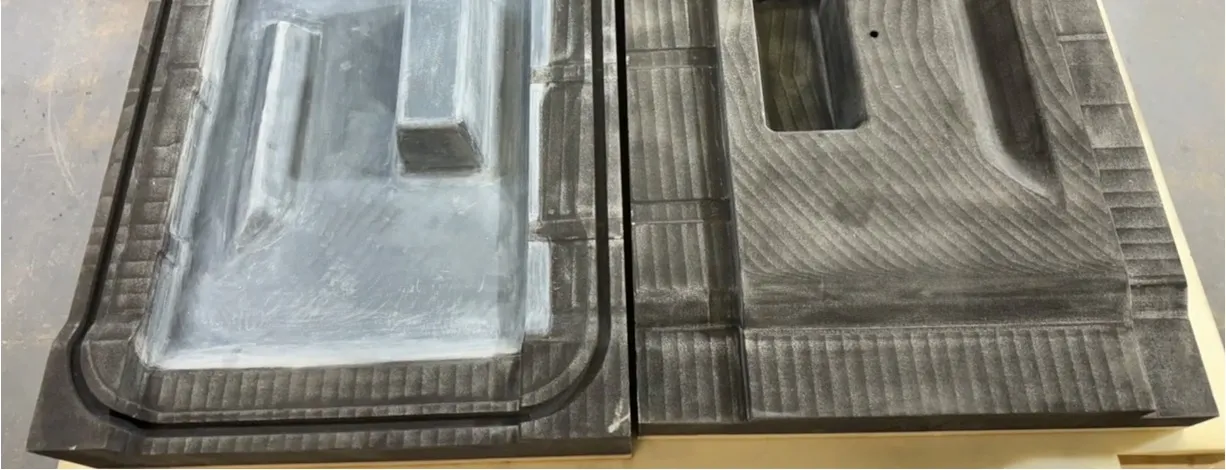
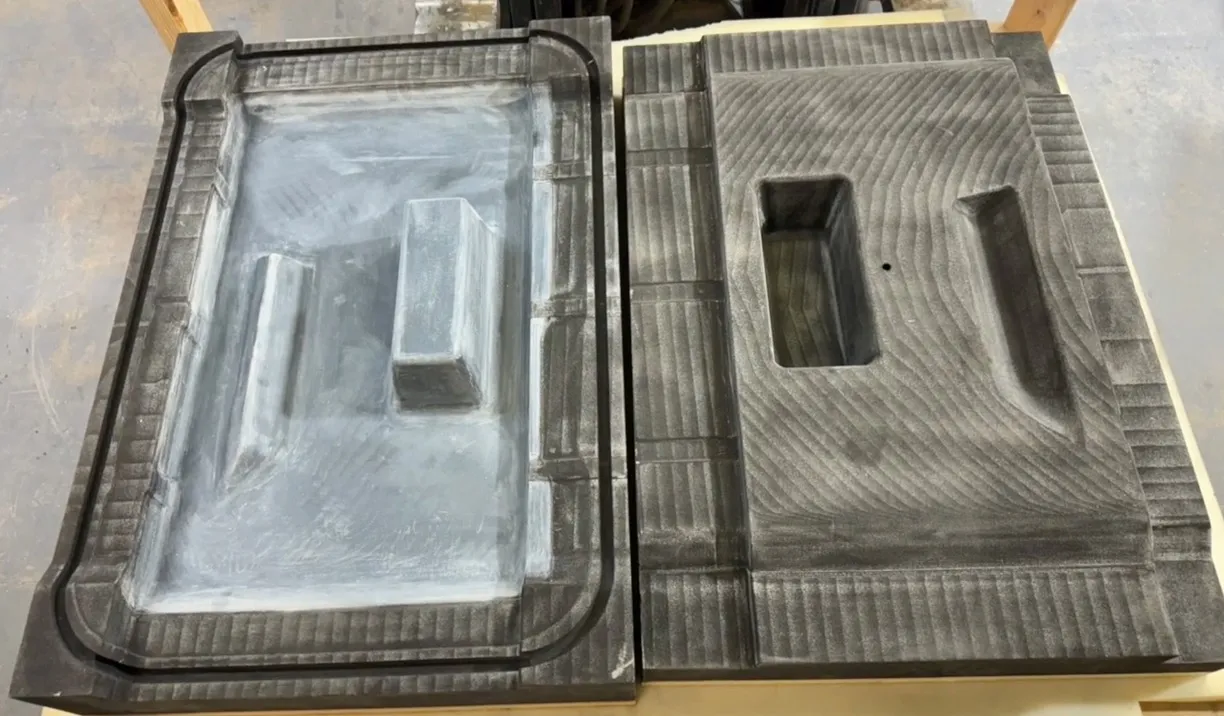
3D printed moulds for fibre composite parts: dimensionally stable, fully isotropic and available in around three weeks.

Tooling for composite parts

Stable under temperature and pressure

In composite processing every detail counts: lay-up, temperature, pressure and curing must match. Our tools are dimensionally stable, fully isotropic and withstand the thermal and mechanical loads of the process, unlike conventional 3D printed plastic tooling. Even temperature distribution ensures clean curing and repeatable part quality.

Lightweight tooling for handling, oven and autoclave

3D printing enables complex shapes and structures that are hard to achieve by machining. The tools are easy to handle and suitable for oven and autoclave processes.

Typical applications

  • Lay-up and infusion moulds for GRP and CFRP
  • Prepreg processing in oven or autoclave
  • Prototypes, development and validation phases, small series
Why 3D printed tooling from Catalysis?

  • Lead time: 2–3 weeks after design approval instead of 3–6 months for aluminium
  • Cost: Around 50 % below aluminium, at the price level of Ureol
  • Tool life: Up to several thousand parts, far beyond Ureol and plastic 3D printing
  • Material: Natural sand material from foundry technology, dimensionally stable, isotropic, no plastic printing
  • One-stop: Design, 3D printing, finishing, quality inspection. No CAD needed on your side
Process

How a project runs

  1. 1Day 0

    Send data

    Tool data or just the part data. We design the tool if you have no CAD.

  2. 2Day 2–4

    Design approval

    You review the 3D design and approve it. Changes are quick at this stage.

  3. 3Day 5–15

    3D printing and finishing

    Sand printing, finishing and quality inspection.

  4. 4Day 14–21

    Delivery

    Shipped on a pallet, usually 2–3 weeks after approval. Base plate and connections on request.

Let's talk about your part

Developing a fibre composite part? We deliver the mould in around three weeks.